Software reengineering services

Keep decades of business logic, not decades of technical debt.
Talk to an architect

20+

years in software engineering

280+

engineers & specialists

4.9

rating on Clutch

Our software re-engineering services help you understand what’s inside your legacy applications, recover the business rules buried in their code, and restructure or migrate outdated components to modern, maintainable technologies.

With 20 years of experience, Abto Software has delivered 270+ projects for clients across industries, including Global Fortune 200 companies. Today, our team comprises 280 engineers, 86% of whom hold master’s degrees in science.

Keep what works. Re-engineer what doesn’t. A free re-engineering assessment to start

Our software re-engineering and modernization services

Reverse engineering

We map code, data flows and dependencies of your existing software to recover the business rules nobody wrote down.

Code restructuring

We untangle coupled code and cut technical debt while preserving existing functionality.

Language conversion

We migrate legacy code and applications from VB6, VBA, Delphi, AngularJS and older .NET versions to modern technologies such as C#, .NET and React.

Architecture re-engineering

We split monoliths into modules, plugins or services that can be developed and maintained separately, with independent deployment and scaling where needed.

Data re-engineering

We migrate schemas and records with business rules, relationships and integrity verified at row level.

UI re-engineering

We rebuild interfaces on modern frameworks to improve user experience without forcing users to relearn their daily workflows.

Knowledge recovery

We turn undocumented logic into specs, decision records and tests your software team can maintain.

Dependency reduction

We replace costly third-party components with in-house functionality where the savings justify it.

Application re-engineering approaches

ApproachWhat changesBest when
Reverse engineer & documentNothing in production yetThe code is poorly documented, and you need to understand how the software system works before deciding how to modernize it.
RestructureInternal code structureThe logic in your existing system is sound, but tightly coupled  code makes every fix or new feature difficult. 
TranslateLanguage and runtimeThe technology is outdated or unsupported, but the existing architecture and functionality still meet your business needs. 
ExtendNew modules around a stable coreThe current system works well, but you need new features or integrations. 
Re-architectSystem structureThe software architecture limits releases, integrations or scalability.
RebuildEverything, from recovered specsThe outdated system can’t evolve, and patching it costs more than starting over.

AI-assisted software re-engineering, with senior engineers in control

AI handles the volume: dependency mapping, code translation, test generation and first-draft documentation. Our senior engineers set the architecture, treat the legacy source as the specification, and verify every result against the real system’s output.

Legacy technologies we re-engineer:

  • VB6


  • VBA


  • .NET Framework


  • WebForms


  • WinForms


  • WCF


  • Classic ASP


  • AngularJS


  • Delphi


  • Oracle Forms


  • Legacy Java


  • MATLAB & LISP modules

Tech stack & standards

Backend

Backend

Frontend

Frontend

  • React
  • Angular
  • Vue
  • Blazor
  • WPF
  • TypeScript
Infrastructure

Infrastructure

  • Azure
  • AWS
  • Docker
  • Kubernetes
  • Terraform
  • GitHub Actions
Database

Database

  • MS SQL
  • PostgreSQL
  • MySQL
  • MongoDB
  • Redis
  • Elasticsearch
Standards

Standards

  • HIPAA
  • GDPR
  • HL7
  • FHIR
  • CDA
  • DICOM
AI

AI

  • OpenAI
  • LangChain
  • LangGraph
  • PyTorch
  • TensorFlow
  • Scikit-learn

Legacy software reengineering case studies

Belt-drive systems engineering toolkit

Belt-drive systems engineering toolkit

Industry: Machinery

VB6, VBA, LISP & WinForms → .NET, WPF, Blazor & Xamarin

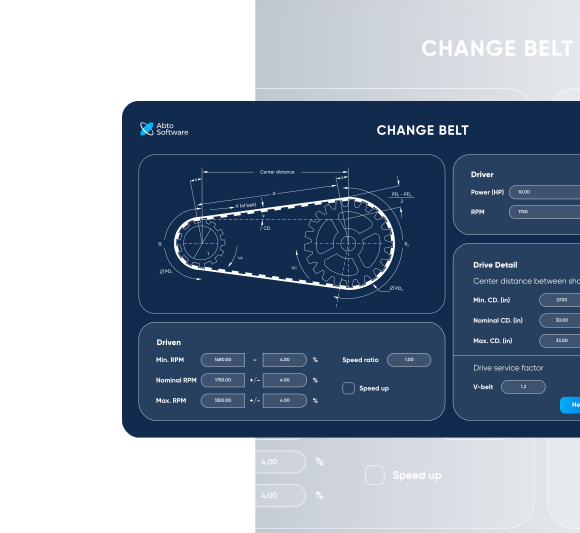
A manufacturer relied on an engineering toolkit built with outdated VB6 and scattered VBA code. Dependencies on MATLAB and AutoCAD were driving up costs, and the system suffered crashes. We re-engineered it module by module, preserving the accuracy of complex calculations and creating a shared business logic core for desktop, web, and mobile.

The results we achieved:

  • 75% of users pay lower licensing costs
  • 6 specialized engineering modules on one stack
  • Fewer runtime crashes
  • Faster training with unified workflows
Belt-drive systems engineering toolkit
RPA platform re-engineering

RPA platform re-engineering

Industry: IT & technology

Monolithic .NET Framework → plugin-based architecture on .NET 7

An enterprise RPA platform was unstable, with fragile automations behind about 80% of bugs, while customer upgrades took up to a month. We introduced an extension-based architecture around the monolith and a new installer for partial upgrades, preserving compatibility with existing customer environments.

The results we achieved:

  • 10× faster customer upgrades
  • 80% fewer automation errors
  • Citrix and Terminal Server support
  • Cross-platform automation toolkit

Dual-setup ERP re-engineering

Dual-setup ERP re-engineering

Industry: Retail

Desktop VB6 ERP → ASP.NET MVC web platform

A 30-year-old desktop ERP with scattered, undocumented logic was blocking business growth. With 100+ client companies relying on the system, a full rewrite wasn’t an option. We ran the old and new systems in sync, migrating one module at a time and validating each in real operations before switchover.

The results we achieved:

  • 12 legacy modules re-engineered, plus 2 new ones
  • 12 menus redesigned into 5 sections
  • Access from any device, not one desktop
  • Higher stability during upgrades
Dual-setup ERP re-engineering
EHR interface re-engineering

EHR interface re-engineering

Industry: Healthcare

AngularJS → React on the existing .NET back end

A Canadian healthcare software provider relied on an EHR interface built with unsupported AngularJS. In addition, extensive business logic was embedded in the front end, which made modernization difficult. We re-coded the front end in React, kept the back end untouched, and reused existing business logic wherever possible.

The results we achieved:

  • Unsupported framework replaced, reducing data-leak risks
  • Familiar clinical workflows preserved


Feedback from our client: 5.0 rating on Clutch

Abto was a major part of the development of our RPA products, including 3 sub-products, they enhanced our engineering standards, did major refractories, shaped our CI/CD processes, built multiple POC’s, helped with customer support in times of crisis, and were a team player all along that time. We got better customer satisfaction, fewer bugs, and less maintenance.

Read the full review

Adam Brooks
Director of Engineering, Nintex

Abto Software’s software re-engineering framework

Discover

We reverse-engineer code, data and integrations to recover the rules and define a phased roadmap.

Prove

We re-engineer one module and compare its output with the legacy system’s to validate our approach.

Re-engineer

We restructure code, migrate technologies or redesign the architecture in manageable increments, one module at a time.

Verify

We run golden-master and regression tests against real data at every increment.

Transition

We cut over module by module and retire legacy parts once their replacements are tested and ready.

Evolve

We add the features and integrations the old system could never support.

Software re-engineering without losing business logic

1
We read the code before we trust the docs
The legacy source shows how the system actually works, so we verify business rules against it, so we verify every rule against it, down to rounding behavior.
2
We match before we improve
We freeze the schema and prove functional parity with golden-master tests before any refactoring begins.
3
Your business keeps running
Parallel runs, phased rollout and fallback paths keep users working through every cutover.
4
We change one thing at a time
Rewrites, code refactoring and data moves happen in separate steps, so every defect has one place to look.
5
We write down what we learn
Recovered rules become specs, decision records and tests that outlast any single developer.
6
We build in security
We address legacy security weaknesses with measures such as parameterized queries and modern authentication, while accounting for applicable regulatory requirements (HIPAA, GDPR , etc,.)

Re-engineering systems that run your business

Healthcare

  • EHR & EMR systems
  • Hospital information systems (HIS)
  • Laboratory information systems (LIS)
  • Practice management systems
  • Billing & revenue cycle systems
  • Pharmacy management systems
  • Patient portals
  • Medical device software

Retail & distribution

  • ERP systems
  • POS systems
  • Order management systems (OMS)
  • Warehouse management systems (WMS)
  • Inventory management systems
  • Pricing & promotion engines
  • Dealer & partner portals
  • E-commerce platforms

Manufacturing

  • ERP systems
  • Manufacturing execution systems (MES)
  • Product lifecycle management (PLM)
  • Quality management systems (QMS)
  • Engineering calculation tools
  • CAD plugins & extensions
  • SCADA systems
  • Supply chain management (SCM)

Finance & insurance

  • Core banking
  • Payment processing
  • Loan origination & servicing
  • Underwriting platforms
  • Claims management
  • Risk management
  • Fraud detection
  • Policy administration

Logistics

  • Transportation management systems (TMS)
  • Warehouse management systems (WMS)
  • Fleet management platforms
  • Freight management systems
  • Route optimization systems
  • Dispatch & delivery platforms
  • Tracking & visibility platforms

IT & software vendors

  • RPA & automation platforms
  • Desktop products moving to the web
  • On-premises products moving to SaaS
  • Installers & update systems
  • Intranet & collaboration platforms
  • Integration middleware

Start where you are

1
Re-engineering assessment
We reverse-engineer your system’s logic, dependencies and data before you commit to a full legacy modernization project.

You get: a recovered system map, a risk register and a phased roadmap with estimates.
2
Pilot module
We modernize one bounded module end to end, running in parity with the legacy system.

You get: proof the approach works on your code, plus measured velocity for the rest of the budget.
3
Full-cycle re-engineering
A dedicated team can start software modernization within 2 weeks and handle everything, from discovery to cutover.

You get: a re-engineered system and a team that stays to evolve it.

FAQ

Timelines for legacy application modernization depend on codebase size, coupling and how much logic is undocumented. Typical ranges for one mid-sized application:

  • Assessment: 2–6 weeks
  • Pilot module: 1–3 months
  • Restructuring a mid-sized application: 3–9 months
  • Re-architecting a core platform: 6–18 months
  • Rebuilding from recovered specs: 9–24 months

Phased delivery means you see working modules long before the end date, and the assessment gives you a timeline built on your code.
But not all applications need extensive re-engineering. If your core still works well and allows for improvements, updating existing software systems can be a faster, more cost-effective option.

Our software reengineering process has six stages, including a working proof before any large-scale rollout:

  • Discover: recover rules, dependencies and data flows
  • Prove: re-engineer one module and confirm parity
  • Re-engineer: restructure, translate or re-architect in increments
  • Verify: test against real data at every step
  • Transition: cut over module by module
  • Evolve: add what the old system couldn’t support

Each stage ends with a decision point, so you can reprioritize or re-budget along the way.

Our core practices when providing application re-engineering services include:

  • Use the original source as the specification, not documentation derived from it
  • Prove functional parity before refactoring or redesigning the schema
  • Change one variable at a time: code, structure or data
  • Validate against real production output, not only unit tests
  • Size the target architecture to your actual load and roadmap
  • Record every recovered rule and decision as you go

A short assessment shows which of these matter most for your application modernization case.

Application reengineering keeps what your software system does well and removes what makes it expensive to run. Typical benefits:

  • Lower maintenance and licensing costs
  • Higher software quality, faster releases and upgrades
  • Improved maintainability and fewer security gaps
  • Clean APIs for cloud services, analytics and AI
  • Business knowledge captured in code, tests and docs, not in a few people’s heads

Our software reengineering company has a proven track record of delivering results, including reduced licensing costs for 75% of users and 10× faster customer upgrades.

One of the main risks when re-engineering existing software systems is losing logic the business depends on without noticing until numbers come out wrong. Other common risks:

  • Hidden dependencies and undocumented integrations
  • Data loss or corruption during migration
  • Subtle behavior changes, such as rounding or precision shifts
  • Business disruption during cutover
  • Scope growth once hidden logic surfaces

We manage these with reverse engineering, golden-master parity tests, parallel runs and phased rollout, which is why every engagement starts with an assessment.

Contact us

Tell your idea, request a quote or ask us a question
We take ownership to make it a success — because we build what we’re proud of.
Yuriy Kapkovskyy linkedin
Chief Sales and Marketing Officer, Co-owner