Legacy application modernization services for complex software

Rising maintenance costs, slow updates, difficult integrations? We modernize legacy applications step by step, keeping your business logic, data and users intact. Your system stays live, and business continues as usual.
Talk to our team

20+

years

300+

engineers

4.9

on Clutch

  • Time to roll out upgrades to one customer cut from up to a month to days — after we modernized an enterprise RPA platform
  • Licensing costs lowered for 75% of users — after we removed costly software dependencies from an engineering design toolkit
  • No planned downtime — a legacy ERP system serving 100+ companies remained operational throughout modernization
Talk to a modernization lead See modernization cases

“We wanted a smooth transition from our existing classic system to a more modern web system that can be securely accessed from any device. Abto is a key member in the continued success of our business goals. They worked closely with us to ensure a smooth integration with the existing system, no downtime for existing clients during the migration and selling to new clients.”

Read the full review

Client review
NDA

Is your legacy application holding you back?

Most legacy systems we modernize aren’t broken. They keep running core business operations or serving customers. But every quarter, more budget goes to keeping them alive. And even routine changes or basic integrations become increasingly complex.

If this sounds familiar, your legacy applications are ready for an assessment.

What you experienceWhat we do about it
Every update comes with risks. Adding or updating features takes too long and can cause unexpected issues in other parts of the system.We implement an extension layer around the legacy core, so you can introduce new features with fewer changes to existing code and a lower risk of disrupting critical functionality. 
Nobody fully understands the code anymore. The original developers are gone, and the documentation stopped matching reality years ago.We treat the source code as the specification and recover legacy business logic from code and data. AI maps the dependencies; a senior engineer verifies every rule.
The platform is out of support. Legacy frameworks like VB6, older .NET versions, or AngularJS make maintenance harder and limit future development.We move you to supported technologies, such as modern .NET, React, or Angular, preserving existing functionality until you are ready to redesign the system.
Licensing and maintenance eat the budget. Third-party services, licenses and workarounds cost more each year.We remove or replace costly dependencies, reduce technical debt, and retire components you no longer need.
You can’t integrate or scale. Connecting new tools or third-party services requires costly custom development, while outdated architecture limits your ability to support more users, workloads, or business growth.We expose legacy functionality through APIs, connect it to modern web and mobile applications, and migrate to scalable cloud platforms where appropriate. We can also support industry-specific integration standards, such as HL7 and FHIR in healthcare.
Security risks are getting harder to ignore. 
Outdated components, limited access controls, and poor data traceability make it difficult to identify and address vulnerabilities. 
Our secure application modernization services harden security during the project, help you meet both regulatory requirements (GDPR, HIPAA, etc.) and your internal controls.
Struggling with the limitations of your legacy system? Book a free 30-minute call with a modernization lead

Our legacy application modernization services

Modernization assessment and roadmap

We analyze your legacy systems, including code dependencies, integrations, data stores, and user workflows, to understand how everything works together. Our team also recovers undocumented business rules, and calculates what the legacy system costs you today. You get a risk register, a modernization approach for each module and a phased roadmap with estimates.

Code migration and refactoring

We migrate legacy applications to modern technologies: VB6 and VBA to C#/.NET, .NET Framework and .NET 6–8 to .NET 10, ASP.NET Web Forms and MVC to ASP.NET Core, WinForms to WPF, .NET MAUI or web. Governed AI automation handles routine conversion; senior engineers handle complex logic.
→ VB6 migration · .NET migration

Architecture modernization

We break monolithic applications into modules or microservices, add extension-based (plugin) architecture around legacy cores, separate front end from back end, and introduce internal or public APIs to connect the existing system with modern applications and third-party services. The result is a scalable application architecture that is easier to change.

Cloud migration and infrastructure

Cloud migration is often the quickest visible win, but moving without a plan just relocates your problems. We can migrate single applications or your full legacy infrastructure to Azure, AWS or Google Cloud. Our developers right-size cloud environments based on actual usage, use infrastructure as code to simplify management, and design for scalability and predictable operating costs.

Data migration and database modernization

We migrate decades of data from legacy ERP, CRM, EMR/EHR, and other business-critical systems, preserving historical records throughout extraction, cleansing, mapping, and transfer. As part of data modernization, we can also restructure database schemas to make data easier to use for reporting, analytics, and AI. → ERP migration · EMR migration

UI/UX, web and mobile modernization

Our team transforms legacy desktop applications into modern web, mobile, or cross-platform solutions. We also migrate outdated frontend frameworks, such as AngularJS, to React or modern Angular, and redesign legacy interfaces to improve usability.

Support during and after the transition

We keep your existing system stable and operational throughout modernization with bug fixes, security patches, and performance tuning. After modernization is complete, we provide ongoing application maintenance and support, including performance monitoring, security updates, and managed cloud services where needed.

AI and automation on top of legacy

Where technically feasible and justified by our assessment, we integrate AI capabilities and robotic process automation (RPA) into existing legacy systems. This helps automate repetitive tasks and streamline workflows while extending the useful life of your applications and giving you more time to plan broader modernization. → Hyperautomation

How we modernize without a big-bang rewrite

Seven modernization strategies, chosen per module

StrategyWhen it fits
RetireThe legacy module is no longer needed, or its functionality is already covered by another system
RetainThe module is stable and meets current business needs, so modernizing it now would offer little additional value 
EncapsulateLogic is sound, but the module needs to connect with other applications through modern APIs. 
RehostThe code is fine, but its current infrastructure is outdated, costly, or difficult to maintain 
ReplatformThe module still works, but its runtime or platform needs upgrading
RefactorThe code is overly complex or poorly structured, making maintenance difficult and costly. 
Rebuild or replaceThe existing system can no longer meet business needs, and rebuilding it or adopting another solution is more practical than further modifications. 

Modernization case studies

Explore our featured projects. Learn how we modernized legacy applications for businesses across industries without stopping the business.

Enterprise RPA platform: customer upgrades in days instead of a month

Enterprise RPA platform: customer upgrades in days instead of a month

Industry: Information technology

A company providing enterprise automation software was struggling with an unstable platform and complicated deployments. Fragile automations caused about 80% of bugs, while upgrading the platform for a single customer could take up to a month.

Instead of rebuilding the entire system, we introduced a plugin architecture around the existing monolith, developed a cross-platform automation toolkit, and implemented health checks and an installer that supports partial updates. We also moved the browser extension from Manifest V2 to V3 in six months and moved core components to AWS.

  • 80% fewer automation errors
  • 10x faster upgrades: days instead of up to a month
  • Full backward compatibility for enterprise customers
Enterprise RPA platform: customer upgrades in days instead of a month
Engineering toolkit: lower licensing costs for 75% of users

Engineering toolkit: lower licensing costs for 75% of users

Industry: Machinery

A manufacturer relied on a belt-drive design toolkit that used complex mathematical calculations to ensure precision but was built with unsupported VB6 and fragmented VBA code. As a result, the toolkit suffered from frequent crashes and data corruption, while licensing costs continued to rise.

We modernized the toolkit module by module, rewrote precision-critical algorithms using regression tests to verify accuracy, rebuilt MATLAB and AutoCAD functions to drop those dependencies, and added cross-platform and mobile features.

  • 75% of users now pay lower licensing costs
  • Fewer crashes and runtime errors
  • One shared business-logic layer across desktop, web and mobile

Legacy stacks we modernize

Applications that have been running for decades often combine legacy technologies from several generations. We migrate applications to modern, actively supported technologies selected for long-term maintainability.

Legacy source

  • VB6, VBA, VB.NET, LISP plugins
  • .NET Framework 4.x, .NET 6–8, WCF, WinForms
  • ASP.NET Web Forms / MVC
  • AngularJS
  • Xamarin
  • Liferay portlets, legacy Java EE
  • MS Sync, SQL Server Compact, Access, Excel-based tools
  • Desktop-only ERP, CRM, POS
  • Legacy EMR/EHR (Epic, Cerner, MEDITECH and others)
  • Browser extensions on Manifest V2
  • On-premises servers

Modern target

  • C#, .NET 10, WPF, Blazor, ASP.NET Core
  • .NET 10, gRPC/REST, WPF, .NET MAUI, web
  • ASP.NET Core, Blazor, React, Angular
  • React, Angular
  • .NET MAUI
  • Java 17/21, Spring Boot, Angular
  • SQL Server, PostgreSQL, EF Core, Dapper, cloud databases
  • Web, mobile and cloud platforms with public APIs
  • Modern EMR/EHR, HL7/FHIR integrations
  • Manifest V3
  • Azure, AWS, Google Cloud; Docker, Kubernetes; Azure DevOps, GitHub Actions, Jenkins

AI-assisted modernization, with a senior engineer at the wheel

AI-assisted tools can speed up routine code conversion, dependency analysis, and test generation in complex modernization projects. But AI doesn’t know which design fits your business or which artifact is the source of truth. That judgment stays with our senior engineers.

What AI doesWhat our engineers do
Reads large codebases and maps dependencies, dead code and hidden couplingSize the architecture to your real workload, not a reference diagram
Converts routine code: VB6 to C#, runtime upgrades, COM mapping, deprecated API replacementVerify every business rule against the original code, down to rounding and type precision
Generates regression and parity tests and keeps documentation currentRun old and new systems on the same data and compare outputs row by row
Drafts implementation plans and scaffolding for new modulesReview estimates of modernization efforts and validate them against the actual system complexity

Industries we modernize for

Legacy systems are often built around the specific processes and requirements of an industry. We modernize our clients’ applications with industry-specific workflows, integrations, and regulatory requirements in mind.

Healthcare and life sciences

  • EMR/EHR
  • Billing
  • Medical device
  • Diagnostic software

70+ healthcare projects, including solutions built to meet applicable HIPAA and GDPR requirements.

We upgrade legacy systems and improve interoperability through HL7, FHIR and DICOM integrations.

Healthcare software modernization →

Manufacturing and engineering

  • Calculation-heavy desktop tools
  • CAD plugins
  • ERP and production planning

We modernize applications where a rounding error costs real money.

Manufacturing → 

Distribution, retail and logistics

  • ERP
  • Warehouse management
  • POS systems

Stores and warehouses rely on our legacy app modernization services to make their tools accessible through modern web and mobile interfaces.

Legacy POS upgrade →

Software vendors and automation

  • B2B platforms
  • RPA
  • SaaS products

We help vendors modernize their legacy systems while their teams can continue releasing new features for customers.

Information technology →

Why us

Why us

We modernize what others rewrite

We don’t start with a converter. Our engineers specialize in software with heavy, poorly documented logic: engineering calculations, billing engines, automation rules. Carrying that logic over precisely is our core skill.

Extend first, rewrite only when it pays

We first assess whether your legacy system can meet new business needs through targeted improvements and recommend rewriting only when extending the existing system is no longer technically practical or cost-effective.

Extension-based design for legacy software → 

R&D and math at the core

Our team includes 40+ AI and computer vision engineers and 50+ experts in math and physics. Our specialists help preserve the accuracy of complex mathematical algorithms when migrating them to modern technologies.

Partners for years, not months

Our two longest engagements have run for more than six years. We have a 94% client retention rate and 4.9/5 rating on Clutch.

Deep Microsoft stack, broad beyond it

Abto Software is Microsoft Solutions Partner with 20+ years in .NET software development. Our expertise also covers Angular, React, Python, and major cloud platforms, including Azure, AWS, and Google Cloud.

FAQ

Legacy application modernization is the process of moving aging software onto a supportable architecture. It can involve assessment, code conversion and refactoring, architecture changes, data transfer, cloud adoption, testing and the transition itself. The goal is to make the application cheaper to run, safer and easier to change, without losing the business logic it carries.

Legacy application modernization services help enterprises reduce technical debt, cut running costs and open legacy systems to new integrations.

Depending on the system, application modernization may involve refactoring code, updating application architecture, improving integrations, and making data more accessible for analytics and AI. The latter two can deliver significant business value by enabling new capabilities and better use of existing data. That’s why we treat application transformation as a business change, not just a technical one.

Our services cover assessment, migration, architecture changes, data, UI and support. For enterprise applications, we provide tailored legacy modernization solutions; for smaller tools, we offer a fixed scope.

Typical ranges for one mid-sized application are $25,000 to $600,000; full rebuilds of complex core systems can pass $1 million. The modernization approach sets the price band. Code size, missing documentation, data quality, integrations and compliance set where you land inside it. We recommend holding a 25–40% contingency until the pilot module is done.

Our team can provide a more accurate cost estimate after the initial assessment of your system.

The timeline for modernization of legacy applications depends on the approach. A rehost or adding an API wrapper takes 1–3 months, refactoring a mid-sized application 3–9 months, and rearchitecting or rebuilding a core platform 1–2 years.

But with phased modernization your existing system remains operational throughout the process.

Yes, and in some cases we recommend it. We can extend the legacy core with a plugin or API layer to add new functionality and enable integrations with modern systems without rewriting the existing application.

Our team followed this approach in the RPA platform project. As a result, the client reduced the time needed to roll out an upgrade to a single customer from up to a month to just a few days.

One major risk in modernization projects is changing too many things at once. When code, schema and data all change together, it becomes difficult to identify the source of errors. To avoid this, we make changes in a controlled sequence and test their impact at each step.

We transition legacy applications gradually. Modules move one at a time, outputs are reconciled against the old version, and every step has a rollback. Our VB6 ERP migration served 100+ client companies with no planned downtime.

That’s our usual starting point for legacy applications. We treat the code as the specification, recover rules from code, data and user interviews, use AI to map dependencies, and verify every rule with parity tests against real output.

AI handles volume: code analysis, routine conversion, test generation and documentation. Senior engineers set the architecture, verify business logic and review all output. AI tools get read-only data access, and all work is covered by an NDA.

Generic software development vendors often treat old code as something to throw away. A specialized team brings a proven approach to legacy logic, data and users. Abto Software provides legacy application modernization for desktop, web and enterprise systems. We also offer portfolio modernization for businesses relying on dozens of legacy applications.

Yes. We can assemble a team and take over within two weeks, starting with an audit of the code and the current state of the modernization.

Contact us

Tell your idea, request a quote or ask us a question
We take ownership to make it a success — because we build what we’re proud of.
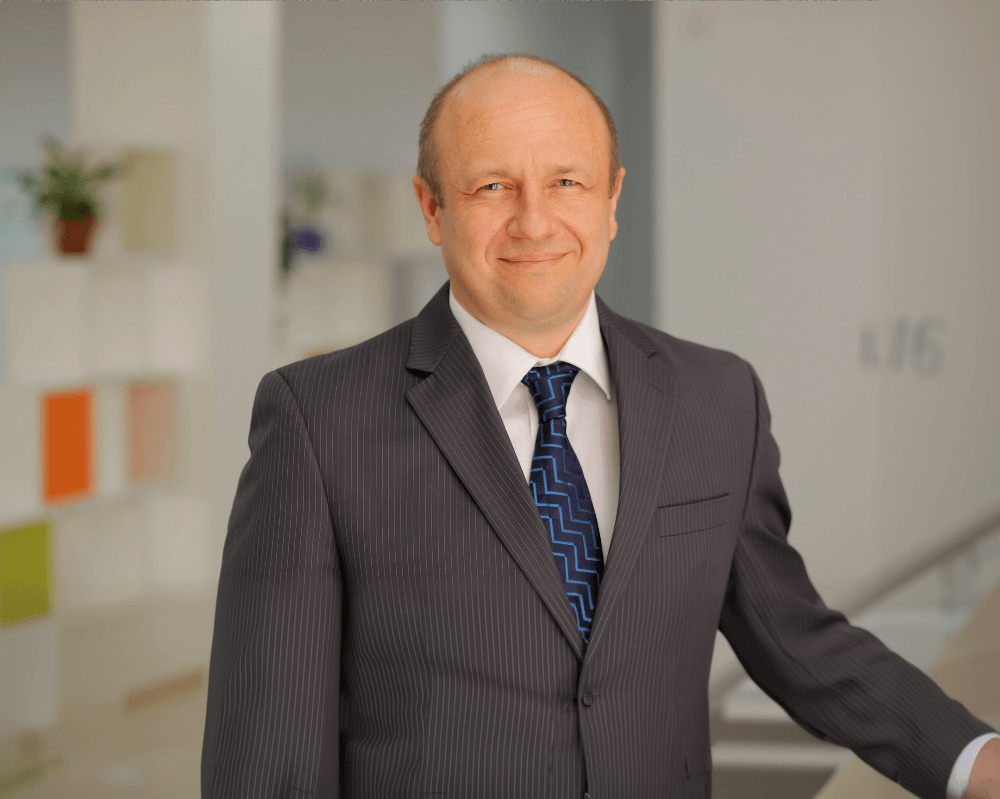
Yuriy Kapkovskyy linkedin
Chief Sales and Marketing Officer, Co-owner