Healthcare software modernization services

Old software doesn’t break just because – it degrades if left to age.
We help without breaking what works to change that trajectory.
 
Increase efficiency. Reduce complexity. Drive revenue. Unlock growth.

For nearly 20 years, we assisted healthcare leaders with technically demanding projects, no matter the niche. And along the way, we modernized health applications while preserving business continuity – no compromises.

With over 2 decades in this competitive market, 300+ specialists, 70+ bold healthcare projects, and a
4.9 rating, we surely can meet the need that brought you here.

How about a partner who’s been repeatedly awarded, a Microsoft Solutions Partner who’s devoted to success? Not just a vendor with pompously described services.

Ready when you are.

The signs your software has reached its limits

It isn’t just outdated – it’s becoming a risk.

  • Every release is risky
  • Every integration is difficult
  • Every update is expensive
  • Every feature is slow
  • Every compliance audit requires extra effort
  • Every growth initiative exposes a limitation
  • Every request gets lost across systems
  • Every user is facing unnecessary friction

The things at stake

The cost of delaying goes beyond code bugs.

Reliability

Reliability

Interoperability

Interoperability

Productivity

Productivity

Innovation

Innovation

Compliance

Compliance

Growth

Growth

Visibility

Visibility

Loyalty

Loyalty

Delays add technical debt

Talk to our engineers
cta image1 cta image2

Healthcare software modernization services

Modernization & migration

  • Legacy modernization
  • VB6 to .NET/C# migration
  • EHR/EMR modernization
  • Code refactoring

Architecture & cloud

  • Architecture redesign
  • Cloud migration
  • Infrastructure modernization
  • Monolith-to-microservices migration

Data & interoperability

  • Database modernization
  • Data migration
  • HL7 & FHIR integration
  • Third-party integrations

Security & compliance

  • Security hardening
  • HIPAA & GDPR compliance
  • Data protection
  • HITECH implementation

Users & workflows

  • UI/UX modernization
  • Workflow optimization
  • Web & mobile modernization
  • Cross-platform experiences

Healthcare software modernization expertise

EHR & EMR systems
HIS & LIS systems
Telehealth platforms
Telemedicine apps
Imaging platforms
Patient portals
Dental platforms
Data warehouses
Medical tourism
Claims processing
BI platforms
and more!

Your competition isn’t waiting

Get a free estimate
cta image1 cta image2

Our experience with legacy healthcare software

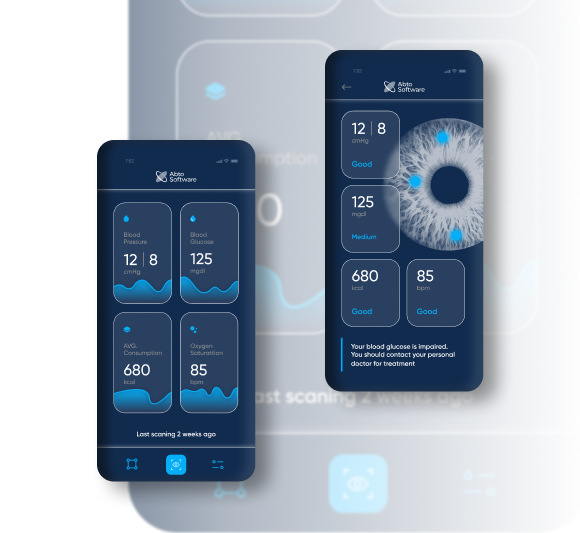
Abnormal blink pattern detection – a legacy app modernization

Abnormal blink pattern detection – a legacy app modernization

A custom mobile application to support accurate testing for traumatic brain injury and serious brain conditions. By connecting medical devices, it simplifies data management – all critical patient details in one place always.

The before: a sluggish, manual process

And after: early detection, fast response, less risk, better outcomes

Abnormal blink pattern detection – a legacy app modernization
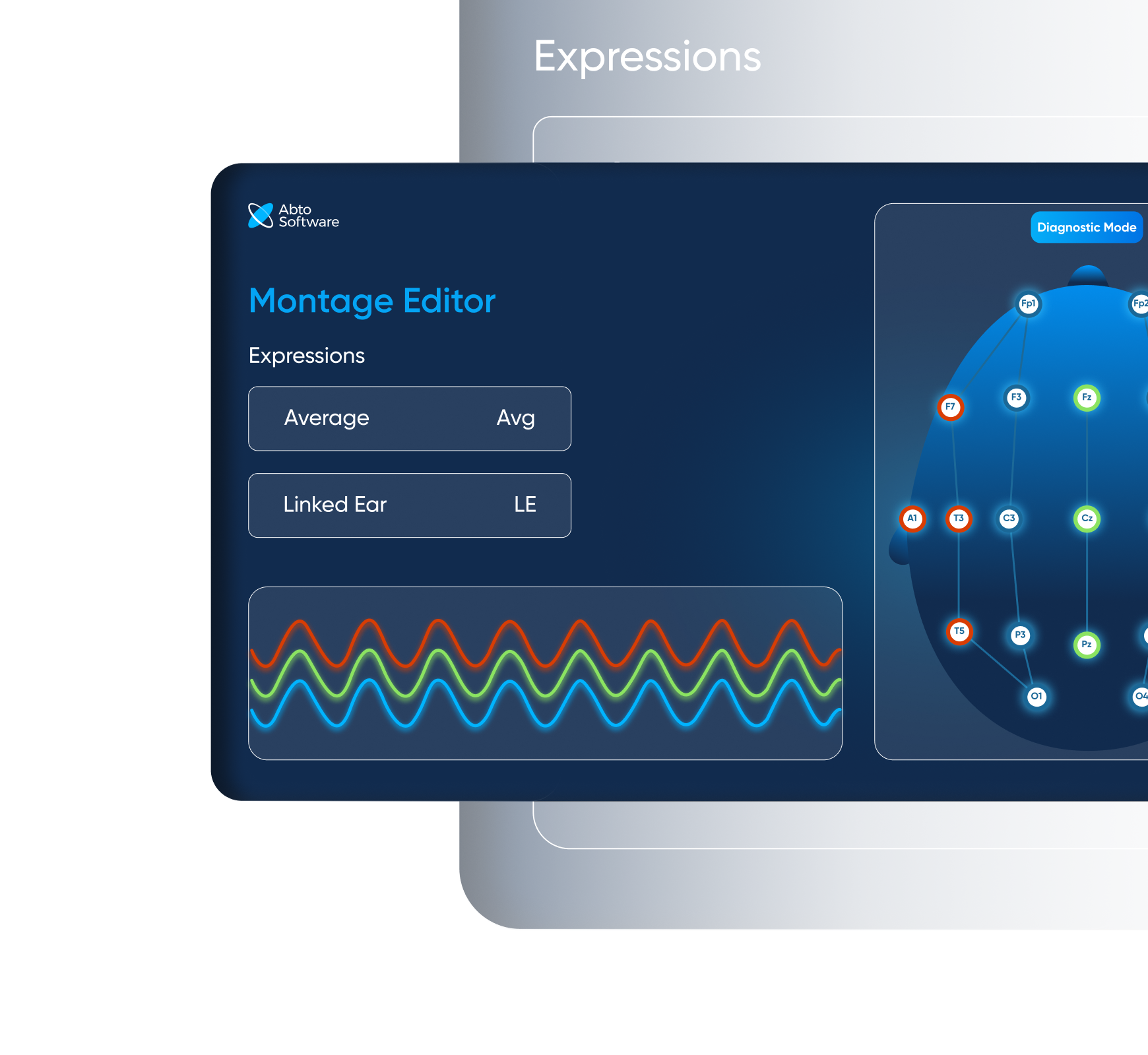
EEG program legacy upgrade

EEG program legacy upgrade

A modern EEG program to replace outdated technology that significantly slowed down EEG record and review. We migrated the system and modernized the components – less pain, more gain, all handled by professionals.

Key benefits:

  • Modern stack
  • Stable operation even during long sessions
  • High compatibility (USB & Bluetooth integration)
  • Quick adjustment to various clinical scenarios

Our clients are staying for years

“They understood our needs, and even if we didn’t know what we were looking for, they would help us clarify and figure it out. We would give ideas, and they translated them to their engineers effectively. They were able to turn those ideas into something tangible that we could use.”

Ryan Fiorini
Co-Founder & CEO
Blinktbi

Our approach

1
Assess
To reveal what’s rusty.
2
Plan
To build your roadmap.
3
Modernize
To upgrade what matters.
4
Integrate
To connect every system.
5
Validate
To ensure everything works.
6
Support
To improve over time.
Why us

Why us

20+ years in the IT game

300+ engineers

70+ delivered healthcare projects

4.9 rating on Clutch

270+ clients all over the globe

94% retention

40+ trained AI/CV engineers

50+ experts in math & physics

Our reviews

Tony Clarey
Tony Clarey
Founder of an IT Consulting Company, USA

ABTO’s flexibility helps deal with unexpected situations, which often occur in business. Stakeholders chenge their minds, or suffer unexpected business shocks.

Philip Nussbaumer
Philip Nussbaumer
Head of Products at Up-Great AG, Switzerland

Abto Software specialists developed a huge and extremely flexible SharePoint Client App for a Swiss customer providing various IT services, including the development of software based on SharePoint and its extensions.

Andreas Meier
Andreas Meier
Head of Product Development at Skybow, Switzerland

We started to build a dedicated team in Lviv together with Abto Software 3 years ago. As a product vendor, we rely on resources that can build up knowledge about our products long-term. Abto was able to provide us with these services.

Tech stack & standards

Tech stack:

Backend

Backend

  • .NET
  • ASP.NET
  • C#
  • C++
  • Python
  • PHP
Frontend

Frontend

  • React
  • Angular
  • Vue
  • JavaScript
Infrastructure

Infrastructure

  • Azure
  • AWS
  • Google Cloud
  • Digital Ocean
  • Docker
  • Kubernetes
  • Terraform
  • Jenkins
Database

Database

  • MS SQL
  • MySQL
  • PostgreSQL
  • Redis
  • Elasticsearch
  • MongoDB
  • XML
  • XSL
Standards

Standards

  • HIPAA
  • GDPR
  • HL7
  • FHIR
  • CDA
  • DICOM
  • HITECH
  • NCPDP
AI

AI

  • OpenAI
  • OpenCV
  • TensorFlow
  • Keras
  • NumPy
  • SciPy
  • Scikit-learn
  • PyTorch
  • LangChain
  • LangGraph
  • Caffe
  • Matlab

FAQ

What does it involve to modernize a legacy healthcare system?

A modernization usually starts with assessing existing applications, infrastructure, integrations, and workflows. After analyzing these findings, you define a strategy and roadmap that aligns with defined business objectives (this stage gets tricky without applying required expertise).

The implementation may include:

  • Encapsulation
  • Rehosting
  • Refactoring
  • Rebuilding
  • Replacing
  • Rearchitecting

How do you modernize a legacy healthcare system without disrupting clinical operations?

A modernization’s overall success is achieved through patience – not just blindly replacing everything “old”. Many upgrade individual apps or components of infrastructure while keeping critical parts without change.

This process might include:

  • Running systems – old and new parts – in parallel
  • Interoperability standards to maintain data exchange
  • Thorough testing
  • Scheduling updates, and other “best practices”

What are the biggest business risks of legacy healthcare systems?

There are many different business risks of legacy healthcare systems, for example:

  • Noticeable slowdowns, system crashes – an unreliable, low-performance system
  • Regular updates and patches, bug fixes – an overall unsustainable system
  • Security vulnerabilities
  • Scalability limitations
  • Difficulty integrating with modern healthcare systems
  • Discontinued support from original technology providers
  • Outdated interfaces, complex navigation, and other common problems that cause user frustration.
  • Difficulty meeting HIPAA, GDPR, and other industry standards that cause business risk 

Talk to our team about healthcare software development.

What are the steps to replace a legacy healthcare system?

The typical key steps to replace a legacy healthcare system might include:

  • Step 01. Assessment & strategy planning
    A comprehensive legacy audit 
    A thought-out strategy planning 
  • Step 02. Technology & infrastructure planning
    The identification of modern technology stacks 
    The planning of upgrades
  • Step 03. Data migration
    Data cleansing to remove existing redundancies and inconsistencies
    Data protection to prevent data loss or corruption
  • Step 04. System migration and modernization
    Either encapsulating, rehosting, refactoring, or rebuilding the existing legacy application
    API development to facilitate data exchange with other healthcare-specific applications
  • Step 05. Integration & interoperability provisioning
    First, ensuring regulatory compliance (HIPAA, GDPR, HL7, FHIR, and other industry standards)
    Second, addressing potential challenges with integrating third-party services
  • Step 06. Testing & quality assurance
    Functional and performance testing
    Load testing to ensure the system can handle high traffic
  • Step 07. System deployment
  • Step 08. System support and maintenance

Get a free estimate for healthcare application modernization. 

How much does legacy system modernization for healthcare usually cost?

The cost will depend on scope, size, complexity, the number of apps, the approach you choose, and more.

  • Small initiatives may cost only tens of thousands of dollars
  • Enterprise programs can require major investments of several million dollars

How much does legacy application modernization for healthcare normally take?

The timeline will depend on team, domain, expertise, legacy architecture, existing integrations, and more.

  • Smaller initiatives may take 3-6 months
  • Large projects can take 12-24 months or longer

What are the benefits of healthcare software modernization?

What do you get?

  • No more operational bottlenecks
  • Sensible savings
  • Data security and compliance for protected patient records
  • Overall flexibility and scalability for future business growth, and many other things!

What are the challenges of healthcare software modernization?

Are there any challenges?

  • Data complexity
    Legacy systems usually store vast amounts of information in unstructured, outdated formats 
    Some systems are using custom-built logic for specialized medical calculations
  • Lost documentation
    Outdated systems were built decades ago, often with insufficient documentation 
    Hidden dependencies between modules or other third-party components can break it all
  • Monolithic architecture
    Many systems are monolithic, which makes it difficult to introduce new features 
    Poor implementation of microservices can cause a range of barriers and issues 
  • Third-party integrations & components
    Many systems usually rely on external, third-party integrations 
    With discontinued vendor support, some components might require additional workarounds

How do you modernize a legacy healthcare application with generative AI capabilities?

You don’t always need to replace a system to benefit from generative AI capabilities – that’s actually quite risky. You can gradually integrate new features while modernizing underlying architecture.

Common examples:

  • Clinical documentation
  • Medical summarization
  • Intelligent search
  • Administrative routines

How do you improve an outdated IT system, in particular EHR system, through automation?

Through automation, you eliminate repetitive processes and support cleaner workflows without refactoring. Modern automation can help to exchange data securely and trigger necessary workflows.

Common examples:

  • Patient scheduling
  • Appointment reminders
  • Claims management
  • Prior authorization

Contact us

Tell your idea, request a quote or ask us a question