Software migration
In section:

Legacy .NET Framework 4.8 in 2026: Migrate, rehost, or re-architect?
Still running .NET Framework 4.8? Compare rehosting, migrating to .NET 10, and re-architecting — with a step-by-step migration roadmap.
read more R&D Blog
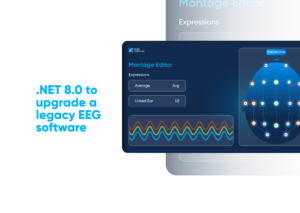
.NET 8.0 to upgrade a legacy EEG software
Learn how Abto upgraded the existing codebase to the .NET framework’s version 8 to ensure better performance & successfully modernized a program for accurate EEG capture and analysis.
read more Portfolio

Is Visual Basic still used in 2026?
Why migrate Visual Basic? Why migrating Microsoft Visual Basic 6 is essential in 2026: learn about VB6 limitations and how .NET is the future.
read more R&D Blog

VB6 modernization: a guide to upgrading legacy applications
On legacy VB6 modernization – our guide to help you understand which strategy to follow. VB6 migration isn’t the only option you have.
read more R&D Blog

How to migrate a VB6 application
Discover how to migrate VB6 applications to .NET with our comprehensive guide. Learn the key steps and strategies, as well as the best practices for seamless VB6 modernization.
read more R&D Blog

Why migrate VB6 to .NET code in 2026
Discover why VB6 to .NET migration is crucial in 2026. We discuss why a VB to .NET conversion is inevitable, the importance of strategic VB6 migration to .NET in 2026, and how to convert VB6 to VB.NET
read more R&D Blog

VB6 to .NET migration: Key considerations
Business leaders still utilizing legacy applications built upon Visual Basic 6 (VB6) should consider .NET migration. In the blog, we review the key considerations and proven tips for successful VB6 to
read more R&D Blog

Our notes on using LLMs for code migration
AI code migration entering the game: no more cognitive overload to handle repetitive work. LLMs introduce a whole new approach.
read more R&D Blog

Code converters for successful VB6 migration
VB6 converters promise a quick fix – but do they deliver? Learn lessons from successful real-world migrations and uncover how to balance automation with expertise.
read more R&D Blog

US government warns against C and C++ code
US government warns against C and C++ code and encourages software developers to move away from programming languages that cause buffer overflows and other memory-related vulnerabilities. Is this the
read more R&D Blog
Contact us
Tell your idea, request a quote or ask us a question

We take ownership to make it a success — because we build what we’re proud of.
Yuriy Kapkovskyy 


 CLUTCH