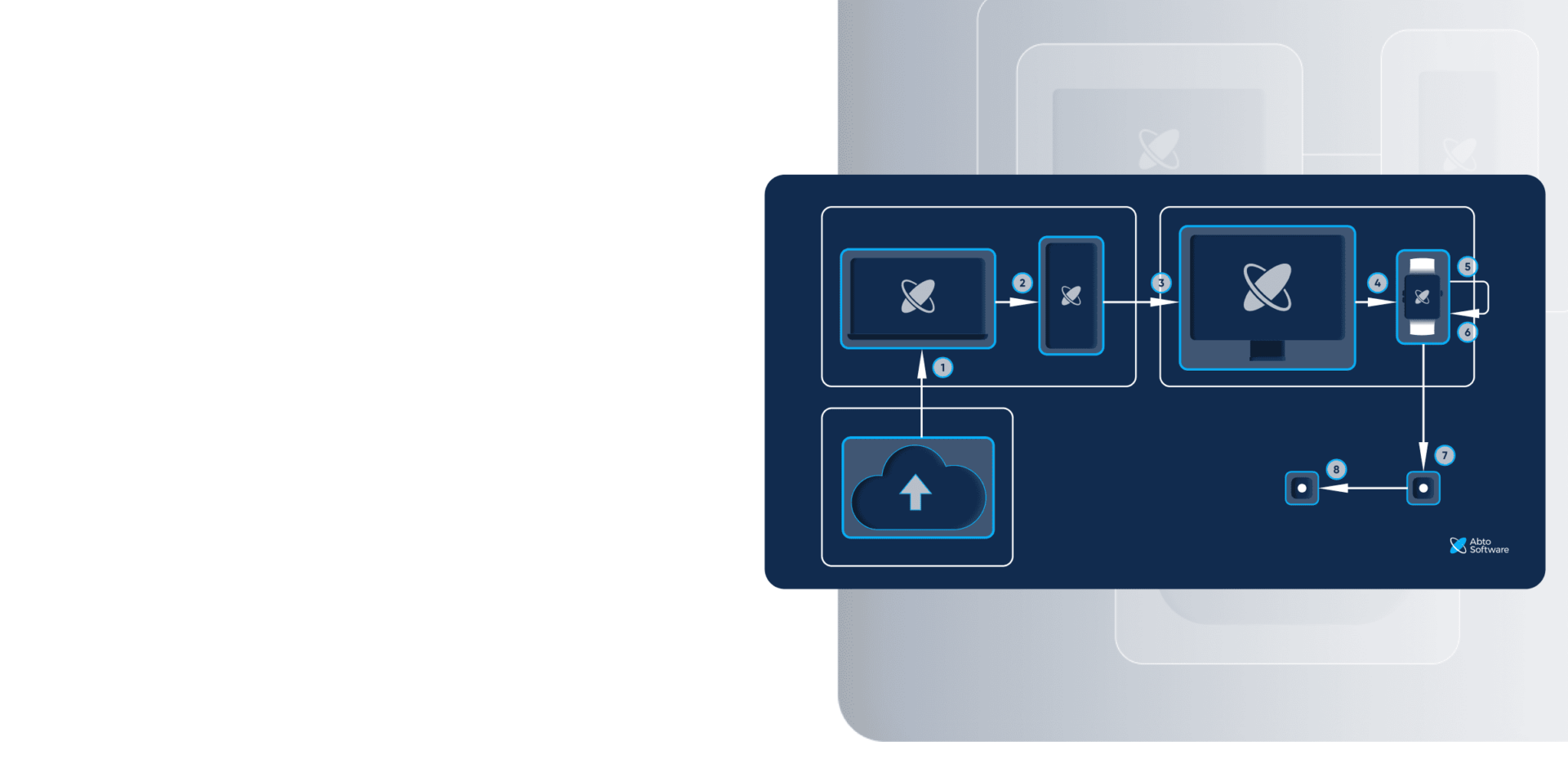
AI-driven medical travel platform
Project summary
We delivered a platform for assisted medical travel that matches the patient to providers that meet their needs. In brief, the platform can analyze individual needs and compare them against the provider’s offering details – personalized matching to simplify medical decisions.
As stated by Accenture, 7/10 users are expecting personalized experiences when making important decisions.
Services:
Project overview
Our client, a startup focused around healthtech innovation, was aimed at building a medical travel platform. Their goal: to assist individual patients in finding the best-quality healthcare services.
The company was looking to stand out from other facilitators and digital health providers through innovation – by implementing an advanced recommendation engine that matches the patient with most suitable providers.
Main goals
- To enter the medical travel market
- Offer patients a way to compare global options and make informed choices
- Differentiate product through personalization – a feature to match a patient to providers
- And build a foundation for future product growth
How the solution works
The medical tourism software is designed to connect the patient to providers all over the globe – to access high-quality service. It collects, processes, structures, and protects data about healthcare providers, including range of services, patient reviews, staff credentials, and prices.
In brief:
- The integrated recommendation system will deliver relevant matches by considering individual needs
- All patients have left to do is scroll through options and pick the provider
Key features
- Smart filtering and search
- Machine learning pipeline enabling personalized suggestions
- Integrated messenger for seamless patient-doctor interaction
- A secure data storage
Our contribution
Stage 1. Market research
We started with analyzing the medical travel industry: its size, growth rates, key segments, and stakeholders. We evaluated monetization strategies and reviewed legal regulations.
When done, we delivered a competitive landscape overview (AI in healthcare tech) and suggested a niche.
Stage 2. Project planning: AI adoption
We continued the discovery to identify potential blockers for adopting AI capabilities and created a roadmap. With expertise in building AI solutions, ML algorithms, and subfields, we suggested a strategy for step-by-step AI adoption, which included a custom recommendation engine.
Stage 3. Product prototyping
In order to understand how patients would interact with the future medical tourism platform, we performed a set of iterations. After testing and integrating all of the ideas from the previous stages, we came up with the final product design and set of functionality.
This way, we managed to plan AI in healthcare integration that works for both the client and end-users.
Stage 4. Software development
We built the platform by using:
- .NET Core for the main functionality
- MS SQL for secure, structured storage
Stage 5. AI development
After raw data collection and labeling, we trained and deployed the custom AI model to provide best matches. Now, patients can obtain the results from the AI driven recommendation system, specifically tailored to their personal preferences.
Main challenges
Market entry
The medical travel industry is complex, fragmented, fast-changing, and shaped by heavy public investments. While many young startups are aiming at capitalizing this opportunity, they face unforeseen challenges, including lacking market understanding, intense competition, and complicated legal requirements.
We addressed this challenge by mapping this environment to ensure the successful market entry.
Data management
The solution we suggested implies gathering and managing data from medical institutions all over the world. That involves the information on services, patient reviews, staff credentials, and prices.
To handle this problem, we had to store sensitive information in the right database with the right structure, which allows fast access.
AI adoption
Software providers in healthcare have always been slow with innovations and accustomed business workflows. Speaking about artificial intelligence in particular, software vendors in healthcare are hesitant to invest in tech that carries data risks, an insufficient ROI justification, and special AI skills.
To overcome this blocker, we introduced a phased product adoption that meets the client’s specific needs.
Value delivered to business
We delivered:
- A medical travel platform that integrates data from partner hospitals & clinics
- And custom-built recommendation engine that applies AI capabilities to provide relevant matches
Which provides:
- A clear market entry – a product that’s supported by thorough market research
- Product differentiation through innovation: smart filtering and search, personalized suggestions
- Future-proof architecture, which allows smooth adoption of features
- Future revenue growth potential – the platform is well-primed for different monetization strategies, from integrations to premium user subscriptions
Tools & technology stack
Tech stack
- Angular 8.0
- .NET Core 3.0
- MS Azure
- Elasticsearch
- T-SQL
- Docker
- Git
Data science
- Python
- NumPy
- Pandas
- SciPy
- Scikit-learn
- Dask
- lxml
- Beautiful Soup
Team:
- 1 project manager
- 2 business analysts
- 1 data scientist
- 4 developers
- 2 business consultants
- 1 UX/UI designer
- QA engineer



 CLUTCH