AI-driven legacy modernization services
Legacy modernization is slow when every line of undocumented code has to be analyzed manually. We apply AI to speed up that work, while our engineers check the results and make every final decision.
Abto Software is a Microsoft Solutions Partner with 20+ years in software development, 270+ clients across industries and a 4.9 rating on Clutch. Our in-house AI/R&D department has been building AI expertise for years, and modernization projects draw directly on it.
We combine AI-assisted code analysis with hands-on engineering to recover undocumented business logic, update aging architectures and move applications to modern, supported technologies. Our team regularly works with VB6, .NET Framework and monolithic systems.
Legacy modernization is slow when every line of undocumented code has to be analyzed manually. We apply AI to speed up that work, while our engineers check the results and make every final decision.
AI maps dependencies, finds dead code and identifies business rules, so you see the full picture before you commit a budget.
We extract the rules hidden in undocumented code and turn them into specs your team can read and review.
We migrate VB6, VBA and .NET Framework code to modern C# and .NET, and our engineers review every change before it’s merged.
We add service layers around your monolith, so you can replace it piece by piece instead of rewriting everything at once.
AI generates characterization tests that capture how your system behaves today, so every change is checked against it.
We move desktop and legacy web interfaces to React, Angular or Blazor without changing the workflows users rely on.
We merge siloed databases and move workloads to Azure, AWS or Google Cloud Platform in phases, so operations keep running.
We expose legacy functions and data through APIs, so your AI tools can use them without a full rebuild.
There’s no one-size-fits-all approach to AI legacy system modernization, so we often combine multiple strategies within one system.
| Approach | What it means | Best when |
| Rehost | Move the existing application to new infrastructure with little or no code changes. | Your application works well, but the infrastructure is outdated, expensive, or difficult to maintain. |
| Replatform | Move the application to a supported runtime, platform, or cloud service while keeping its core architecture. | The current platform is outdated but the architecture still fits your business. |
| Refactor and convert | Improve code structure or convert legacy code, such as VB6 to C#, while preserving existing functionality. | Your business logic is valuable but outdated languages, dependencies, or poor code quality make maintenance difficult. |
| Incremental re-architecture | Gradually replace legacy components or modules while keeping the rest of the system running. | You need to modernize a business-critical application without taking the entire system offline. |
| Rebuild | Develop a new application using modern technologies, architecture, and design while preserving essential business logic and functionality. | The existing system is too outdated or complex to modernize cost-effectively, and targeted improvements are no longer practical. |
| API wrapping | Add APIs to connect legacy functionality and data with modern applications, cloud services, or AI solutions. | Your core software system works but you need new integrations, automation, or AI capabilities. |
We modernize outdated systems by putting generative AI and AI agents to handle the analysis and routine code work that used to take weeks. Our architects decide where the system should go, review every change and sign off before anything reaches production.
.NET 6/7+, ASP.NET, ASP.NET Web API, C#, C++, Python, Node.js, PHP, GraphQL, REST
React, Angular, Vue, Blazor, WPF, JavaScript
Azure, AWS, Google Cloud Platform, DigitalOcean, Docker, Kubernetes, Terraform, Jenkins, Keycloak, RabbitMQ
MS SQL Server, MySQL, PostgreSQL, MongoDB, Redis, Elasticsearch
HIPAA, GDPR, HITECH, HL7, FHIR, CDA, DICOM, NCPDP
OpenAI, LangChain, LangGraph, PyTorch, TensorFlow, Keras, scikit-learn, OpenCV

Industry: Information technology
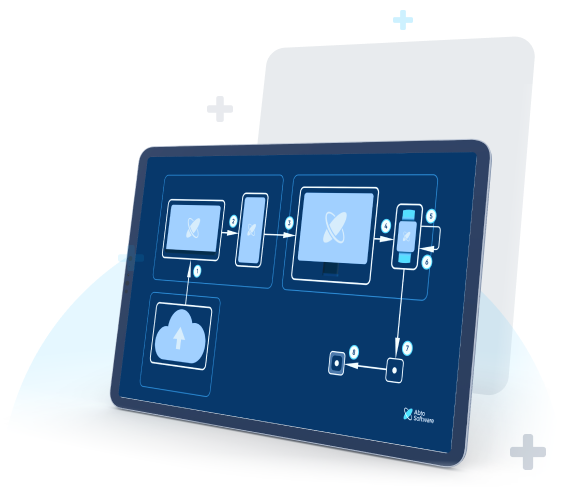
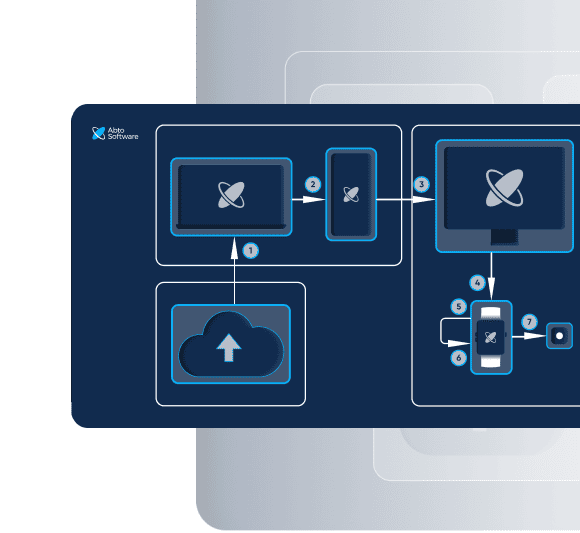
Monolithic RPA platform → plugin-based architecture on .NET 7, Kubernetes and Manifest V3
Fragile automations caused about 80% of bugs, and enterprise customers had to fully uninstall and reinstall to upgrade. We built a plugin architecture around the monolith and a new installer with partial upgrades, keeping existing automations backward compatible. The engagement has been ongoing since 2019.
The results we achieved:
Industry: Machinery & manufacturing
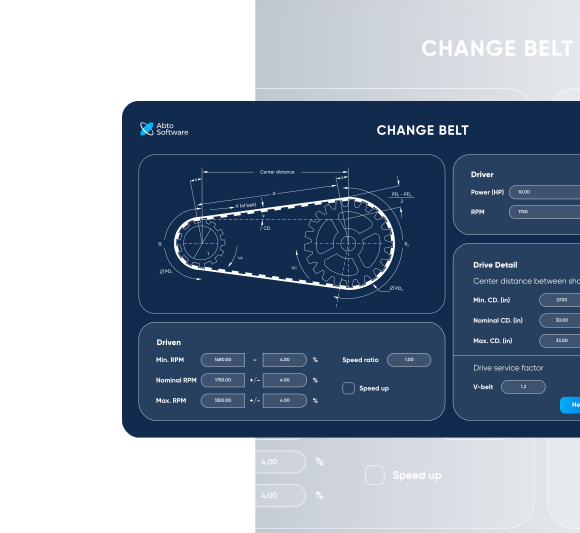
VB6, VBA and LISP → C# on .NET 6/7 with WPF, Blazor and Xamarin
The toolkit ran on an unsupported VB6 framework that suffered from data corruption and crashes, while dependencies on MATLAB and AutoCAD kept licensing costs rising. We migrated the code to .NET, rebuilt engineering algorithms with precision checks to prevent regressions, recreated MATLAB- and AutoCAD-dependent functionality to reduce third-party dependencies, and moved shared business logic into common libraries.
The results we achieved:
Industry: Nonprofit
VB6 desktop CRM with 14 used across 14 offices → C# .NET web app with React and REST APIs
The organization’s staff relied on slow VPN and Remote Desktop sessions, and offices exchanged data through insecure file exports. We migrated the legacy CRM to .NET in iterative steps, with manual and automated testing at each stage, so every office stayed fully operational during the transition.
The results we achieved:
Industry: Government
VB6 Windows Forms with ActiveX and ADODB → C#/.NET three-tier application with ADO.NET
The children sponsorship system ran on VB6 with obsolete ActiveX controls and raw data access code. We reverse-engineered the application, converted it to C# and refactored it into a clean three-tier architecture, separating business logic from data access.
The results we achieved:
Clutch: 4.9 / 5
“We wanted to move our existing VB6 Project to a web-based ERP system and integrate our mobile app. The entire process needed to be completed without causing issues to the existing system. Abto worked closely with us to ensure a smooth integration with the existing system and no downtime for existing clients during the migration.”
EHR, EMR, PACS, LIS, RIS, HL7 and FHIR interface engines, EEG and diagnostic device software, patient portals, telemedicine platforms
ERP, MES, engineering design and calculation tools, CAD-integrated applications, PLM, quality management systems, industrial RPA and robotics integrations
Core banking modules, payment processing, decision and risk models, customer support automation, KYC and AML workflows, reporting engines
WMS, TMS, package and delivery management platforms, fleet tracking, EDI integrations, order management systems
Case management systems, benefits and sponsorship administration, document management, citizen portals, records and archive systems
Custom CRM, donor and sponsor management, program and grant tracking, multi-office data synchronization, field reporting tools
The timeline for AI-driven modernization depends on the system. The main factors are:
AI speeds up the stages that traditionally take the most manual effort: code analysis, dependency mapping, recovering undocumented business rules, drafting code conversions, generating tests and writing documentation. Modernization strategies, architecture decisions, code review and final approval stay with our engineers, so speed never comes at the cost of control.
The most reliable way to get a realistic estimate is an assessment or a pilot on one module, which shows how fast the chosen approach to legacy system modernization works on your own code.
AI tools analyze, document, convert and test legacy code, while engineers set the direction and approve every change. The process usually includes six steps:
Each step is described in detail in our AI code modernization framework.
AI works best when it speeds up a well-structured engineering process, with experienced engineers guiding the work. Key practices include:
We follow these practices on every modernization project and can explain to you how they apply to your system.
The main benefit is speed without losing the business logic built into your legacy system.
The risks are real, and each one has a specific control.
A top legacy modernization company proves its method on your code before it asks for a long commitment. When comparing partners:
Our legacy application modernization services start with an assessment, so you can judge our work on your own code.



 CLUTCH