



Digital mental health ecosystem for children and families

From clinic management to continuous, family-centered mental healthcare for children — combining clinical workflows, digital consent, gamified therapy, AI-enabled experiences, research infrastructure and national eHealth integration.
video preview
Client
Nadija Children Foundation
,
Region
EU
,
Ukraine
,
Product
Nadija Virtual Hospital (NVH)
,
Engagement
Discovery
,
MVP
,
Custom platform
,
THE OPPORTUNITY FOR IMPACT

More accessible, personalized,
and engaging digital mental healthcare

Abto Software partnered with Nadija Children Foundation to develop generative AI-powered therapeutic experiences: AI-generated illustrations, an interactive CBT triangle, and personalized exposure therapy games. They support clinician-guided therapeutic practice beyond appointments, enabling personalized exercises and structured feedback for follow-up sessions. This mental health app case study demonstrates how generative AI for mental health can support more accessible, personalized, and engaging digital mental healthcare.

Generative AI-powered therapeutic experiences

Nadija Virtual Hospital incorporates generative AI mental health applications that help transform therapeutic concepts into personalized visual and interactive content. The solution illustrates how AI-based mental health apps can support clinician-guided care by making therapeutic exercises more engaging, understandable, and adaptable to individual needs. Rather than working as a standalone AI for mental health app or AI based mental health app, Nadija Virtual Hospital is a mental health AI platform where every generated image and scenario sits inside a clinician-defined treatment plan.

Rather than replacing clinicians, AI supports content creation and personalization, while clinical decisions, treatment planning, and approval remain with the clinician.

The Solution

Six building blocks of the ecosystem

The Solution
01/ 03

Interactive CBT triangle

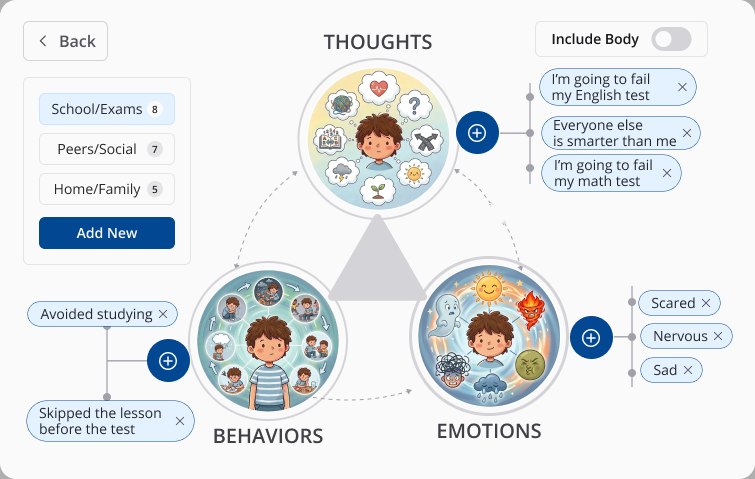
The CBT triangle illustrates how thoughts, feelings, and behaviors influence one another. During a session, the doctor and child work together to identify each part of the triangle using a situation from the child’s own life. Generative AI can then create images based on what the child describes, turning abstract concepts into personalized visual representations. This is one example of how AI applications in mental health treatment can make established therapeutic approaches more interactive and accessible to children.


EXAMPLE:

A child describes being afraid to answer a question in class:


Generative AI creates an image for each part, helping the child see how their feelings, thoughts, and behavior connect within the same situation. The doctor and child can use these visuals to discuss the pattern and explore alternative thoughts or responses.


WHY IT MATTERS
The CBT triangle can be difficult for children to grasp when explained only verbally. Personalized visual representations make the concept more concrete, help children reflect on their own experiences, and give the doctor and child a shared reference point for therapeutic discussion.

AI-powered exposure therapy

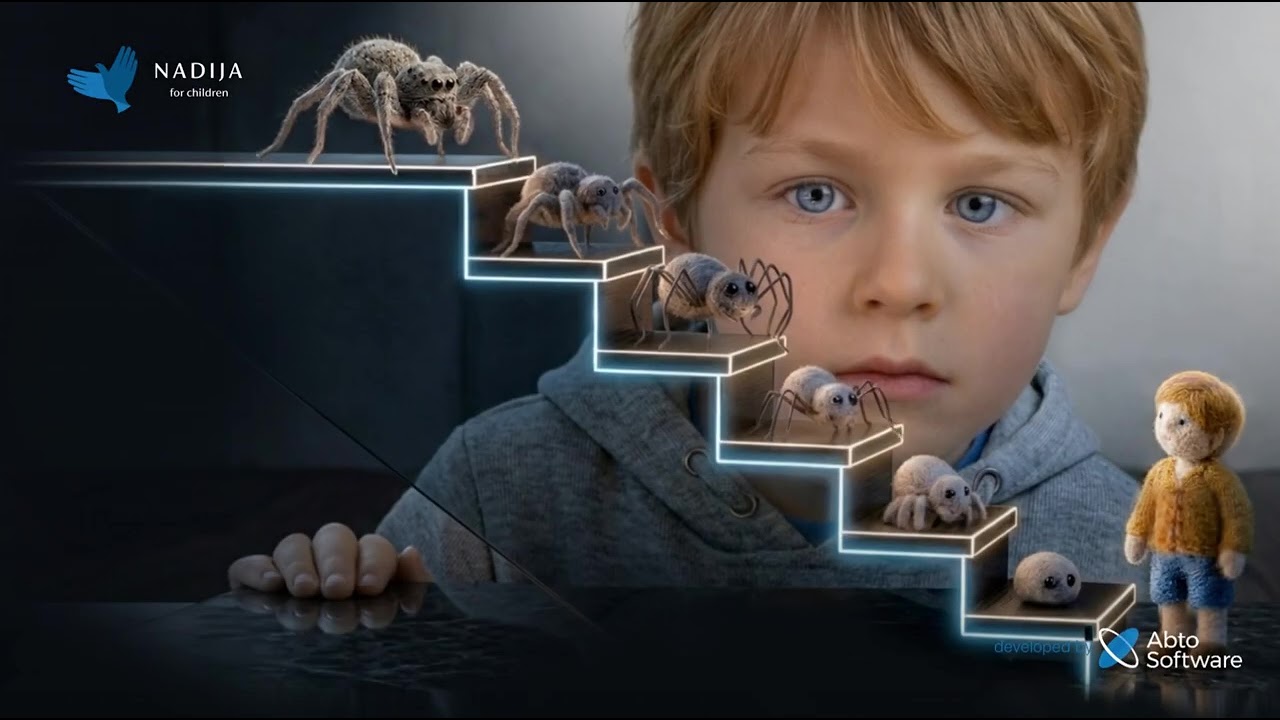
Generative AI transforms clinician-defined exposure stages into personalized images and interactive game scenes. The doctor determines the sequence of challenges, assigns an anxiety level to each stage, and reviews and approves every generated scene before it becomes available to the child. The games turn exposure from a conversation in the clinic into guided practice at home. This is an example of AI applications in mental health support extending beyond educational content into structured, clinician-guided therapeutic practice.


EXAMPLE:

A child who is afraid of dogs begins with a game featuring a small dog at a distance. Later stages introduce a dog closer by, followed by a scenario involving petting a dog, if appropriate to the clinician-defined plan.

  • Each game presents a short story with visual scenes and response options, allowing the child to practice at their own pace.
  • Before and after each game, the child records their feelings. The doctor can review this information day by day and use it when planning the next session.
WHY IT MATTERS
Exposure therapy requires gradual, structured practice. Personalized interactive scenarios can help children understand each step, engage with exercises outside the clinic, and practice within a clinician-defined treatment plan. For doctors, the approach creates a more structured way to review between-session activities and the child’s reported responses. It demonstrates a potential application of AI-powered mental health platforms in supporting continuity between clinical appointments.

AI-generated illustrations

Generative AI creates illustrations for the children’s app, making psychoeducation materials and therapeutic exercises more visual, friendly, and age-appropriate. Instead of relying exclusively on written instructions, children can explore concepts through illustrated situations that are easier to relate to and understand. These AI mental health applications use generated visual content to support children’s understanding of psychological concepts and therapeutic activities.


EXAMPLE:

Instead of reading a text-only exercise about a difficult emotion, a child sees an illustrated scene representing a familiar situation. The visual helps the child understand the concept and provides a concrete starting point for discussion or practice.

WHY IT MATTERS
Children have different developmental needs and ways of processing information. Visual, age-appropriate materials can make abstract mental health concepts more approachable and support children’s understanding of the exercises they are asked to practice. The same visual approach could extend to AI applications in middle school mental health education.

Categories
Business automation
Healthcare
Project management
Digital mental health ecosystem – Nadija Virtual Hospital

Contact us

Tell your idea, request a quote or ask us a question
We take ownership to make it a success — because we build what we’re proud of.
Yuriy Kapkovskyy linkedin
Chief Sales and Marketing Officer, Co-owner