Clinical trial AI agent for oncology
Project summary
About 80% of planned clinical studies are delayed for one simple reason – not enough eligible patients to enroll. To bring a new oncology treatment to market can cost multiple billions, and each extra day of delay is critical (and measured in millions of losses).
We suggest a reduction in routine administrative workload of up to 40% – fewer blockers, faster launch.
Services:
Project overview
In cancer clinical trials, quick admission can drive both valuable scientific capital and positive patient outcomes, yet existing manual efforts can’t really keep pace with complex eligibility criteria.
The solution: a specialized clinical trial matching agent to automate the labor-intense, error-prone workflow.
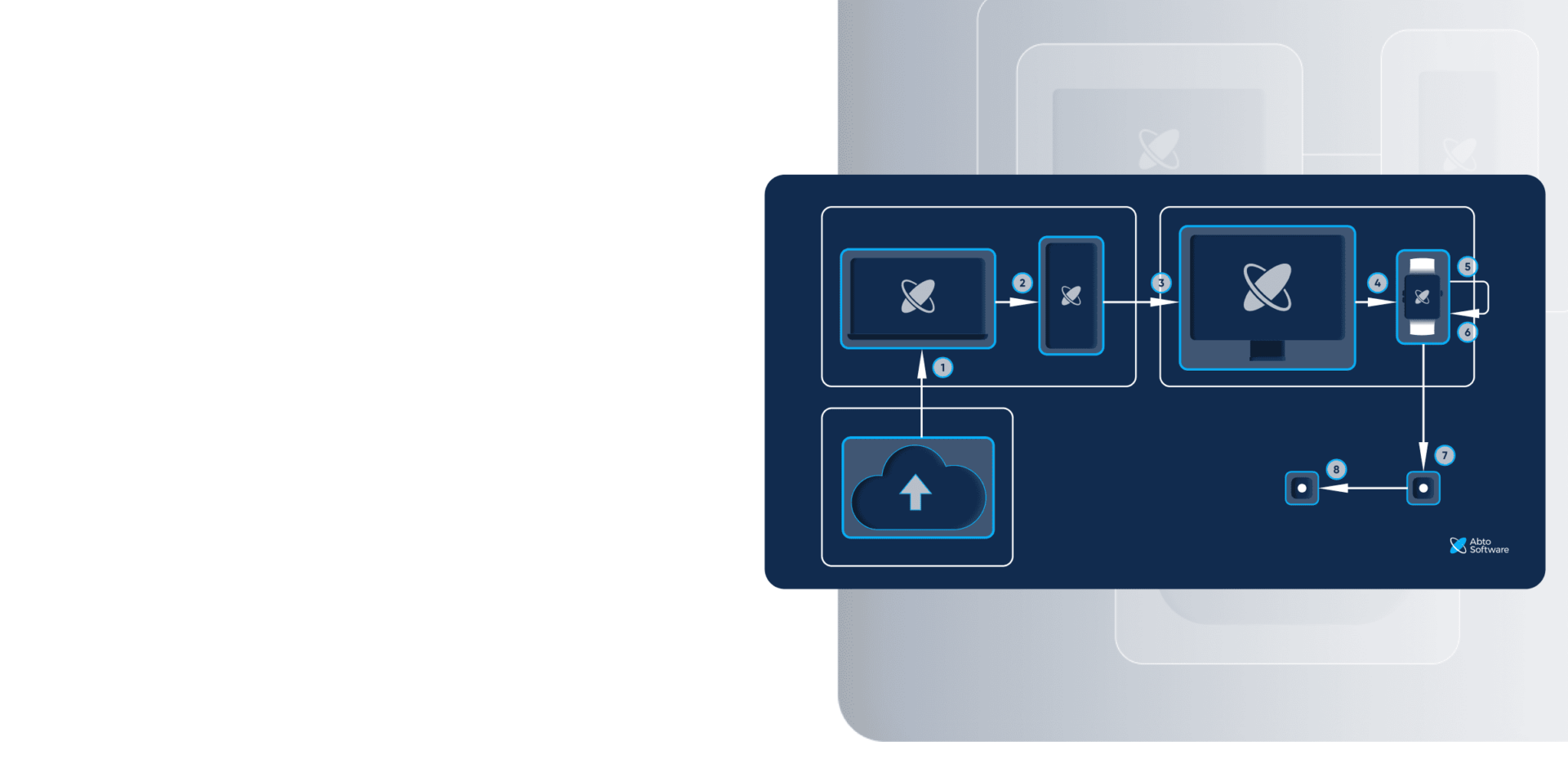
The described CrewAI-directed agent is designed to help patients comb through various oncology clinical trials by ingesting health records, interactively closing data gaps, and fitting the profiles for further eligibility checks. By applying hard/soft rules, it returns relevantly ranked, plain-language recommendations, including rationales. The agent also stores and re-matches the profile to new clinical trials, and contacts the facilities for screening. The result: faster found viable studies, less frustrating dead-end calls, and minimized manual filtering.
What’s more – the agent can integrate with modern-day virtual clinics for reach beyond usual hospital sites.
Main goals
- Quickly match patients to eligible studies through automated, criterion-by-criterion screening
- Sensibly cut dead-end outreach by pre-filtering ineligible studies
- Provide clear, plain-language recommendations (patient-friendly summaries and rationales)
- Keep living, enriched profiles and re-match patients automatically for new clinical trials
- Securely protect PHI (personal health information) by design
The problem
Clinical trials in oncology are providing cancer patients with access to cutting-edge experimental treatments. But still and all, properly matching potential patients with studies is difficult and involves multiple processes, from sifting through criteria to analyzing medical histories.
Manually handling this process, as it’s mostly done, is labor-intense and prone to unintentional human error. No surprise that most clinical trials are struggling with meeting recruitment goals.
Clinical trials for oncology are of special importance, as every week spent in searching for a well-fitting study could impact the patient’s future outcomes.
Traditional methods mean professionals must screen through databases and contact assigned coordinators. That includes numerous calls and emails, which causes huge frustration for both the professional and patient.
The solution
We developed a smart AI agent that helps to identify and pursue best-fitting studies for patients with oncology. By leveraging NLP (natural language processing), it automates the workflow and minimizes associated efforts, helping patients faster access relevant treatment.
Recent research showed that AI models can match the patients to studies with almost human-expert accuracy. In particular, that means dramatically minimized screening times & costs.
How the solution works
1. Patient profile registration
First thing, the patient’s personal profile is registered, which includes medical history, cancer type and stage, prior treatments, and other study-relevant information.
The agent will then take over:
- By using NLP capabilities, it’ll parse unstructured notes and extract meaningful details
- If the health profile is incomplete, it’ll query the user for any missing details being critical to eligibility (for example, “Has there been a prior immunotherapy?”)
2. Intelligent trial search
Armed with the profile, the agent will search the database and retrieve clinical trials that might possibly match. Going beyond basic search, the agent might generate unique keywords by considering individual peculiarities and retrieve a list of studies from tens of thousands of options.
For example, the system might ask, “is there a history of any autoimmune disease?” if the scenario excludes such patients.
3. Automated matching
For each candidate selection, the agent will perform a criterion-by-criterion screening against the profile.
In particular:
- By using NLP capabilities, it’ll interpret each criterion and check the patient for compliance
- Moving further, it’ll mark each study as eligible/ineligible or one that needs extra clarification
4. Recommendation ranking
Next step: the agent will present a catalog of matching clinical trials, all ranked by how the patient fits them. Each listing comes with a brief, plain-language summary and note on why it’s a potential option.
For example, the agent might note all criteria are met: “The study is accepting ALK+ patients who have had 1-2 prior therapies, which matches the history.”
5. Patient support
Beyond listing clinical trials, the agent can help the patient take the next steps – for each recommended study, it provides clear guidance on how to proceed (by providing contact details, for example).
In our envisioned scenario, the agent can draft an email to the clinical coordinator to provide a summary of the health profile with the relevant details.
6. Continuous monitoring & updates
If the health profile is in the system, the agent will continue to check for new clinical trials that can be relevant.
For example, “a new Phase II clinical trial that meets the profile started recruitment.”
Patient support from A to Z
Patient scenario
A patient has advanced lung cancer, and with standard treatment being ineffective, she considers clinical trials. They register on the matching platform and allow the agent to access their records, which include prior therapy, laboratory results, pathology reports, and other key details.
Profile enrichment
The agent will process the information and ask follow-up questions to fill some gaps:
- ECOG 1 (basic self-care but no heavy work) and mild, controlled hypertension are reported
- The agent will update the information and retrieve lab values for certain clinical trials
Finding candidates
The agent will search fitting studies and prioritize those for ALK-positive tumors, as the one that was specified. From hundreds, it’ll narrow to 15 late-phase trials within feasible travel range or offering travel assistance – this filtering takes seconds versus days if compared to typical manual review.
Eligibility screening
The agent will evaluate the match:
- It will narrow down the search to several cancer studies, in particular:
- A new Phase II ALK inhibitor clinical trial
- An immunotherapy clinical trial
- For some potential matches, the agent must ask additional questions, in particular:
- Whether there were any autoimmune diseases
- Whether there are known brain metastases
- A few cancer studies – for example, those targeting EGFR mutations – get removed
- Five high-potential clinical trials are left for review
Final results & recommendations
The agent will present a list with ranked clinical trials, their score and purpose, eligibility notes, and location. For example, “this study is testing a pill to fight ALK-positive tumors (lung cancer) after failed prior therapy”.
Taking action
With consent, the agent can contact the top trial site and send the profile and interest, all automatically. That done, the patient can then be scheduled for an official screening without making multiple calls and waiting for months till a fitting study is found.
Value delivered
For providers & clinicians:
- Smart decision-making without replacing healthcare professionals, but assisting through insights
- More focus on patients (40% less routine work without loss in efficiency)
- Increased efficiency
- Reduced time and cost associated with manual workflows
For patients:
- Personalized guidance – no more blind navigation through complex clinical databases
- Faster enrollment – especially important when fighting aggressive conditions
- More empowerment by increasing the chance of joining a well-fitting clinical trial
- Less frustration by reducing the number of false viable options
For sites managing trials:
- Better referrals, both pre-qualified and higher-quality
- Less resources wasted screening unsuitable candidates
- Quicker enrollment, and therefore quicker finishing clinical trials
- Shorter time-to-market for treatment by expediting the research
Broader impact:
- Smarter matching – AI agents can improve over time by learning from cases
- Greater inclusivity – AI agents can uncover core reasons for mismatches
- Gap detection by highlighting any shortages for specific health profiles
- Barrier reduction by expanding over networks (healthcare facilities, advocacy groups, and other)
Tools & technology stack:
LLM orchestration:
- CrewAI
- Pydantic
APIs & background jobs:
- FastAPI
- Celery/Redis
Data ingestion:
- SMART-on-FHIR
- Mirth Connect
- ClinicalTrials.gov (AAct)
- OCR (Tesseract/Textract)
Data retrieval and storage:
- PostgreSQL
- Pgvector
NLP & patient-trial matching:
- ScispaCy
- BioClinical BERT
- OPA/Drools
- Eligibility DSL
LLMs & generative tasks:
- Azure OpenAI
Infrastructure & MLOps services:
- Docker
- Kubernetes
- Terraform
- MLflow
- Prometheus
- Grafana
- Sentry




 CLUTCH