Geofencing platform for high-risk site control
Project summary
Geofencing and site-control platform that turns hazardous worksites into overseeable, manageable operations. We delivered one single control layer – virtual boundaries, live map, zone-based alerts, employee monitoring – that provides both efficiency and safety.
Fun fact: location-based technologies can minimize worksite incidents by up to 40%.
Services:
Project overview
The client is a technology company who provides networking and geofencing solutions powering connectivity. Their focus: to deliver site visibility.
The project addresses the unique operational safety needs of hazardous industries — such as construction and transportation — where high-risk working conditions are prevalent. By providing continuous oversight, the solution helps mitigate key risks (workplace injuries, protocol violations) and prevent associated damage: financial fines, legal liabilities, and others.
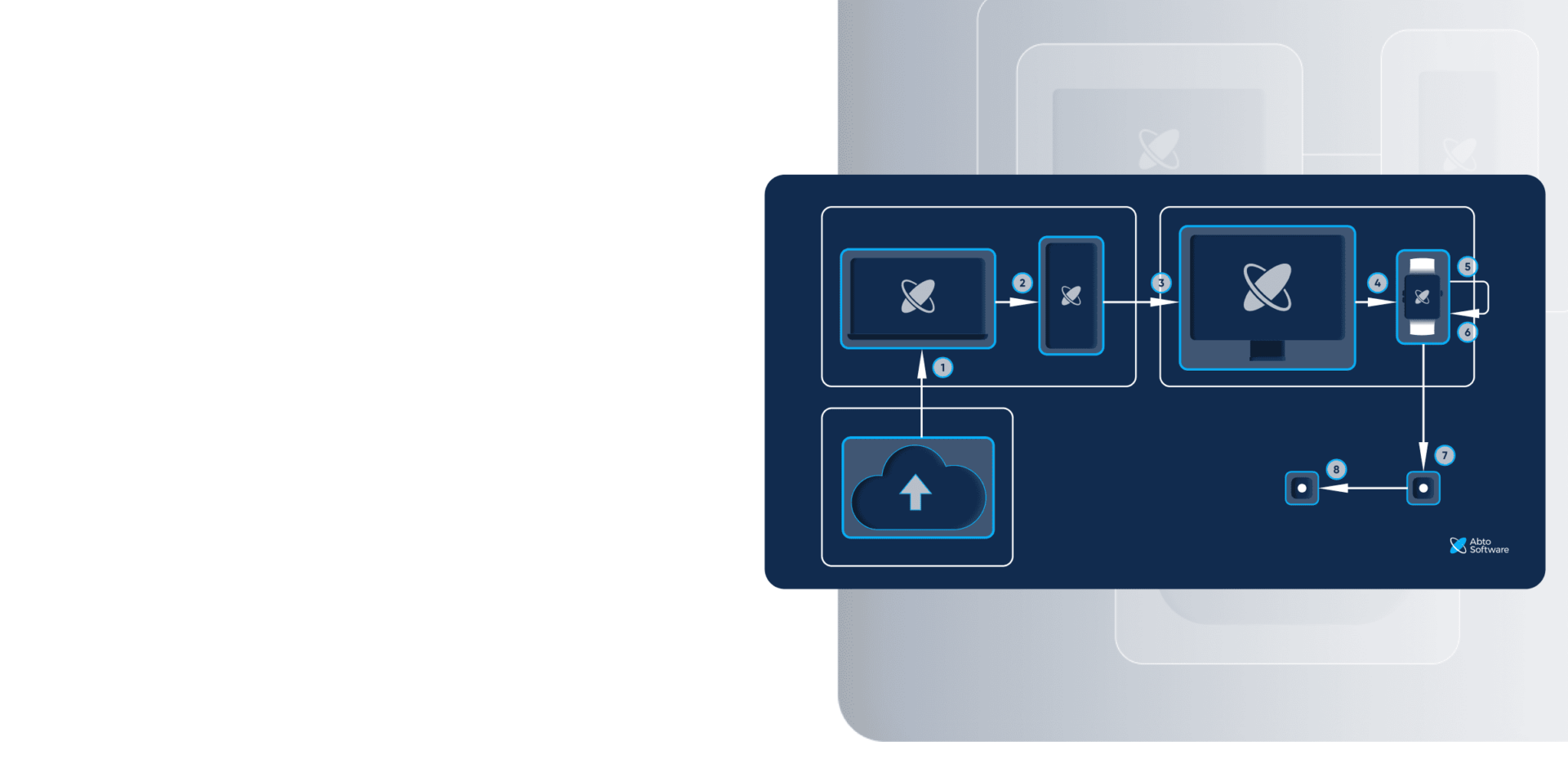
Our team was contracted to design a real-time monitoring and geofencing platform to enable worker safety. The results: a solution that combines a web-based management portal, a mobile worker app, and integrated GPS trackers that provide instant insight into employees and equipment.
In short:
- The manager can oversee both people and assets to protect their teams and machines
- And teams stay connected, informed, engaged, and safe – all using our platform
Main goals
- Provide safer workplace conditions through real-time location awareness
- Replace static work plans with live, location-based coordination
- Enable proactive hazard recognition and response
- Drive overall operational efficiency through visibility across processes
The problem
The problem: on-site safety in environments that change.
Construction, transportation, machinery, energy & utilities – the industries where sites are dynamic by nature. Hazards move, machines break – the conditions can change in minutes.
Across domains, most teams still rely on static work plans, which involve a traditionally manual coordination. Policies exist, but enforcement is typically quite careless.
The daily blind spots are critical:
- The routes are defined in advance, then quickly become outdated
- The alerts are slow or buried in logs
- Worksite incidents are typically being addressed after escalation
- Dynamic conditions always outpace manual updates
The solution
The solution: worksite control in real-time.
We entered the partnership to develop a real-time monitoring and geofencing platform, which combines:
- A web-based management portal
- A responsive mobile application for workers, which allows:
– To access location information
– To receive location alerts (for example, hazard proximity)
– To keep in touch with colleagues
– And update their progress
How the solution works
The concept:
- The manager must define geofence zones, for example:
– Safe areas
– Work zones
– Restricted areas
– Hazardous locations - All employees and machines are tracked in real-time
- The system will alert the manager if someone is entering a zone they shouldn’t
- All activities are stored and can be used for audits, analysis, reporting
Key features:
- Geofencing technology (virtual boundaries around locations that trigger predefined alerts)
- A live map view with locations of workers and machines
- Location-based alerts & notifications
- Employee monitoring:
– Fall detection
– No-movement detection
– Lone worker support features
– SOS signal - On-platform messaging
- And other essential features:
– Task planning & statuses
– Audit logs, and more
Our contribution
- Web development
- Mobile development
- Functionality expansion
- Third-party integration
- Quality assurance
- Automated testing
Main challenges
- RMT stations’ unstable performance
- GPS trackers’ unstable behavior across models and firmware
- Reliable performance under continuous real-time updates
- Location accuracy even within mixed environments (indoors, outdoors, urban areas, and more)
Tools & technology stack
- .Net 6
- C# 10
- HTML
- CSS
- JS/JQuery
- Angular
- Microsoft SQL Server
- Entity Framework 6
- SignalR
- Leaflet
- Docker
- Firebase
Timeline:
- December 2023 – November 2024
Team:
- 1 project manager
- 1 software architect
- 1 DevOps engineer
- 4 full-stack developers
- 2 QA engineers
- 1 UI/UX designer
Value delivered to business
The platform is using location signals to create a single control layer – site safety that’s proactive, not casual. The effect: more insight, faster decisions, greater performance, and compliance.
The client now offers their customers a product that delivers:
- Improved safety in high-risk work zones
- Enhanced efficiency through on-hand project insights
What’s more, the platform is designed to function even within low connectivity, which means no disruptions.
Control where it matters, confidence where it counts.